
From Netflix dramas to tourism, beauty, food and fashion, K-content has evolved into a global cultural ecosystem. During the K-Expo France Media Review, industry leaders explored how Korean storytelling is transforming not only entertainment, but entire industries across Europe.

Bringing together some of the leading voices behind Korea’s cultural expansion, the K-Expo France Media Review featured Choi Seung-hyun, Vice President of Netflix Korea, film critic Oh Dong-jin, Jung Sun-hwa, Head of the Korea Tourism Organization Paris Office, Kim Hyung-seok Head of Nongshim Europe and Park In-nam Executive Director of the Korea Creative Content Agency (KOCCA). Together, they explored one central question: how has Korean content become one of the strongest cultural forces in Europe?
While K-pop and K-dramas often dominate conversations surrounding the Korean Wave, the panel highlighted a much broader reality. Today, Korean storytelling influences consumer habits, travel decisions, fashion trends, food industries and even international economic growth.
Authentic stories with universal appeal
Netflix Korea Vice President Choi Seung-hyun explained that the company’s philosophy has never been to create productions specifically for overseas audiences. Instead, Korean creators focus on telling stories that resonate first with local viewers. Ironically, this authenticity is precisely what has allowed Korean productions to travel across continents.
One statistic perfectly illustrates this evolution: according to Netflix’s own research, approximately 80% of Netflix subscribers worldwide have watched Korean content, while a 2024 survey found that 84% of French respondents had experienced Korean content through Netflix.
Series such as Tastefully Yours demonstrate how local stories can naturally become global successes without sacrificing their cultural identity.


When entertainment becomes economic growth
One of the strongest themes of the conference was the idea that K-content now generates value far beyond streaming platforms.
Nongshim Europe revealed that collaborations linked to popular productions including the recent success of K-Pop Demon Hunters contributed to a 46% increase in European sales during the first half of the year. The phenomenon reflects a much larger trend.
KOCCA explained that Korean content exports reached a record 14.075 billion dollars in 2024, while the wider K-culture ecosystem covering beauty, food and consumer products represents an industry worth hundreds of billions of dollars.
According to them, every dollar generated through content exports creates additional value across related industries, reinforcing the idea that Korean entertainment now functions as a powerful economic driver.
The Korean Wave inspires people to visit Korea
For the Korea Tourism Organization, the impact of K-content is visible every day. Director Jung Sunhwa shared how dramatically French perceptions of Korea have changed over the past decade.
Products once found only in Korean supermarkets are now present in major retailers such as Carrefour and Monoprix, while Korean cosmetics have become a familiar sight across Paris. More importantly, entertainment has become one of Korea’s strongest tourism campaigns.
French visitors increasingly discover Korea through dramas, films and music before deciding to travel. Many visitors even mention specific productions such as When Life Gives You Tangerines as the inspiration behind their desire to visit destinations like Jeju Island.


The numbers reflect this enthusiasm: French visitors to Korea increased from approximately 110,000 in 2019 to around 180,000 last year, with nearly 70% belonging to younger generations.
France and Korea: from inspiration to collaboration
Film critic Oh Dong-jin offered one of the conference’s most thoughtful perspectives by reflecting on the changing cultural relationship between France and Korea.
Three decades ago, Korean cinema sought recognition within one of Europe’s most respected film cultures. Today, the relationship has become far more balanced.
Rather than one country influencing the other, Korean and French creators increasingly inspire each other through shared artistic exchanges.
French audiences appreciate the bold storytelling and emotional honesty often found in Korean productions, while Korean creators continue drawing inspiration from French cinema, fashion and artistic traditions.
The future, according to Oh Dong-jin, lies not in competition but in collaboration.
K-Expo France as a bridge between culture and business
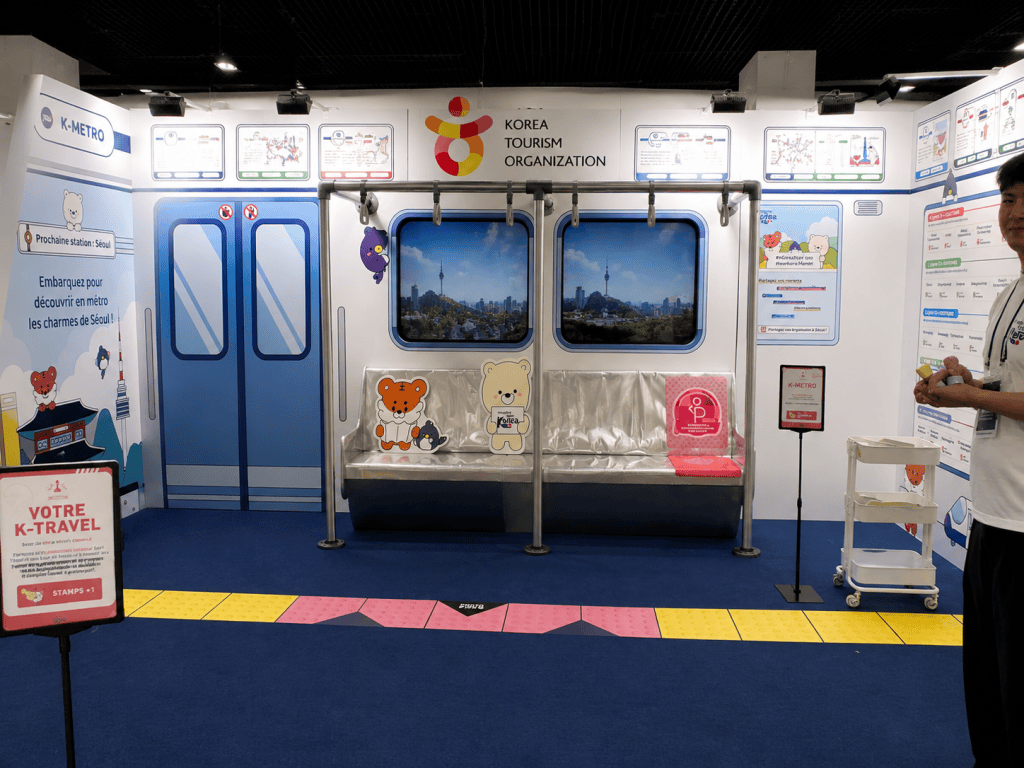
More than simply an exhibition, K-Expo France was presented as a platform connecting every aspect of modern Korean culture.
Entertainment companies share the same space as tourism organizations, airlines, beauty brands and food manufacturers not by coincidence, but because they all contribute to the same ecosystem.
For KOCCA, this interconnected approach represents the future of cultural diplomacy.
Rather than promoting content alone, K-Expo France aims to transform cultural influence into business opportunities, international partnerships and sustainable long-term growth throughout Europe.


Perhaps the most striking message from the Media Review was that Europe remains only at the beginning of this story.
Although Korean content enjoys unprecedented popularity across the continent, Europe still accounts for only a relatively small share of Korea’s total content exports.
For every speaker, this represents not a limitation, but an opportunity.
The Korean Wave is no longer defined solely by hit dramas or chart-topping music. It has evolved into a global ecosystem where storytelling inspires travel, drives consumer trends, supports businesses and strengthens cultural dialogue.
If this discussion made one thing clear, it is that K-content’s greatest success may no longer be entertainment itself but its ability to connect industries, cultures and people across borders.