
Playful and hard to define, Thai-German artist CUPNOODLE is carving out her own musical identity. From YUM to her upcoming project FARANG, Sasha Johst embraces humour, cultural contradictions, and the freedom to belong to more than one world.

CUPNOODLE may have a playful name and a colourful artistic identity, but behind the project is Sasha Johst, an artist who takes her work seriously while questioning what it means to be taken seriously. Having spent much of her life abroad before returning to Thailand, she has learned to embrace the contradictions that shape her, both personally and creatively.
Through music that brings together different influences, languages, and cultural references, CUPNOODLE challenges the expectation that artists must fit neatly into a single category. Following YUM, her upcoming project FARANG will become a major focus in 2027, exploring what it means to belong to different places without feeling entirely at home in just one.
In this conversation with Soul Stage Media, shenreflects on the freedom to experiment, the human experiences behind music, and the importance of creating a space of her own.
CUPNOODLE, the Person Behind the Name
Léane: Let’s start with your name. “Cupnoodle” is such a fun and unexpected stage name. When did you realize that it actually represented the kind of artist you wanted to be?
CUPNOODLE: I realized I needed to stop caring so much about what people thought of me. I take my music seriously, but that doesn’t mean I have to take myself seriously all the time. In fact, I think I make better art when I don’t.
Choosing a name like CUPNOODLE was the first step towards becoming the artist I wanted to be. It may sound silly and not particularly glamorous, but I like proving that playful identities and meaningful music can coexist. I’m sincere about what I create, but sincerity doesn’t have to look a certain way.
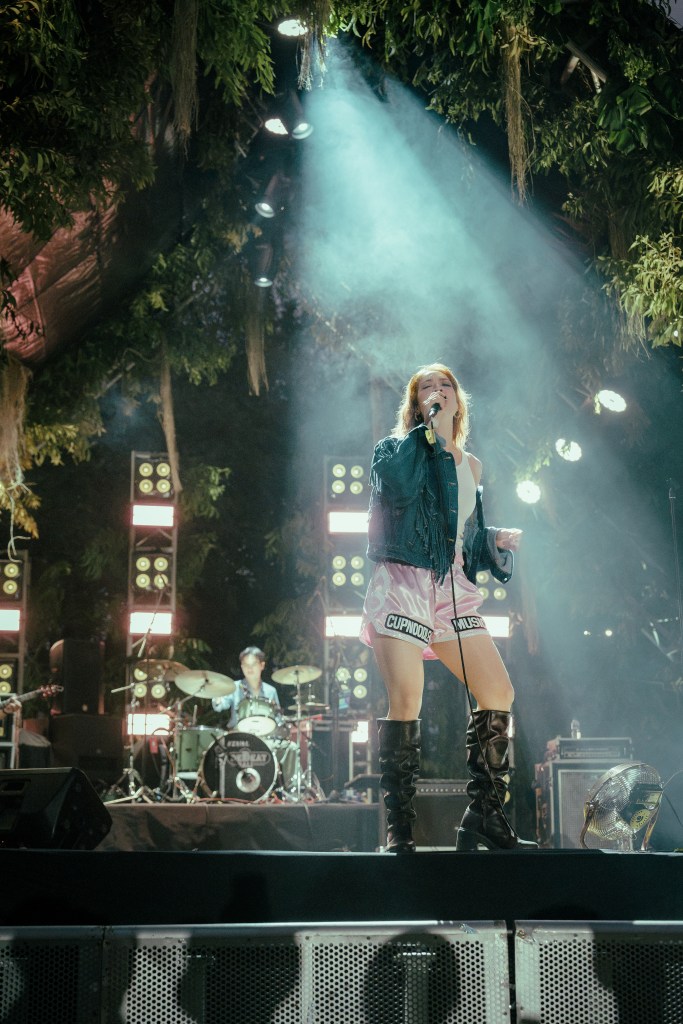
Léane: You’ve lived and studied in Europe before returning to Thailand. Did coming back to Thailand feel more like coming home, or like discovering a place that was already familiar but somehow new to you?
CUPNOODLE: Both.
I was born in Thailand, but I’ve spent a huge part of my life outside of it. I’ve lived in the UK, Germany, Japan, and the Netherlands, so coming back was weird because technically I was coming home, but sometimes I felt like a foreigner in my own country.
And actually, being away made me much more curious about being Thai. Things I probably wouldn’t have paid attention to before, like the nuances of the language, humour, music, and little cultural habits, suddenly became really interesting to me. I think I had to leave Thailand to realize how Thai I actually am.
Léane: You seem very comfortable mixing things that don’t necessarily belong together, different genres, languages, cultures and even aesthetics. Do you think you’ve always been that way, or did you have to learn to stop worrying about fitting into one box?
CUPNOODLE: I definitely had to learn it.
For a long time, I thought you were supposed to figure out what you are. What genre are you? Are you a Thai artist or an international artist? Are you Asian or European? Pick a box. And eventually I thought… who made these boxes and why can’t I make another one?
The funny thing is, the moment I stopped trying to make everything fit neatly together, CUPNOODLE started making more sense. The contradiction is the identity. I think humans are obsessed with categorizing things because it makes us comfortable. Unfortunately, I’m very inconvenient to categorize.
Music Without a Recipe
With YUM, CUPNOODLE explores the possibilities of combining different musical flavours while making room for humour and unexpected ideas. Her approach also raises a question about creativity itself: what makes a song meaningful is not simply how it sounds, but the experiences and intentions that led to its creation.

Léane: YUM was built around the idea of mixing different “flavors” of music. Now that you’ve had some time with the project, is there a flavor you discovered while making it that you didn’t expect to enjoy so much?
CUPNOODLE: I think humour.
Before CUPNOODLE, I thought if you wanted people to take your music seriously, the music had to be serious. Then I realized humour can actually say something quite profound.
Sometimes you can make somebody think much harder by making them laugh first. That’s become a big part of what I do now. The subject can be existential, uncomfortable, or sad, but there can still be a joke in there somewhere.
Léane: With “A.I. CAN’T DO,” you explore what makes human creativity different in a world where AI can imitate so much. What is one thing you believe AI will never be able to capture about making music?
CUPNOODLE: The reason you needed to make the song in the first place.
AI can imitate a chord progression, a voice, or a production style, probably eventually extremely well. But there’s a difference between being able to create something and needing to say something.
A song can come from embarrassment, heartbreak, an inside joke, your childhood, or something somebody said to you ten years ago that you still think about for some stupid reason. AI can learn the pattern of the output. But it didn’t live the life that caused it.
And ironically, I made a song called “A.I. CAN’T DO,” so I’m basically picking a fight with my future employer.
Léane: You’re a producer as well as a singer and songwriter. Does producing your own music make you feel more free creatively, or does it sometimes make it harder to let go and say, “Okay, this song is finished”?
CUPNOODLE: Production is the part where I really enjoy collaborating. Since I write my songs myself, I usually have a clear idea of the message and story I want to tell by the time I reach that stage. I see production as adding colour to that story. I have a strong sense of how I want a song to feel, and my production background allows me to help shape its sound. But I also value bringing in a producer I trust, with their own ideas and perspective.
The writing is where I establish what I want to say; production is where I open the door to collaboration. It’s one of my favourite parts of making music.
Between Worlds
For CUPNOODLE, navigating between cultures has become a source of creative freedom. Her experiences in Thailand and Europe, along with AXEAN Festival, have encouraged her to embrace her Thai identity and create her own space between worlds.
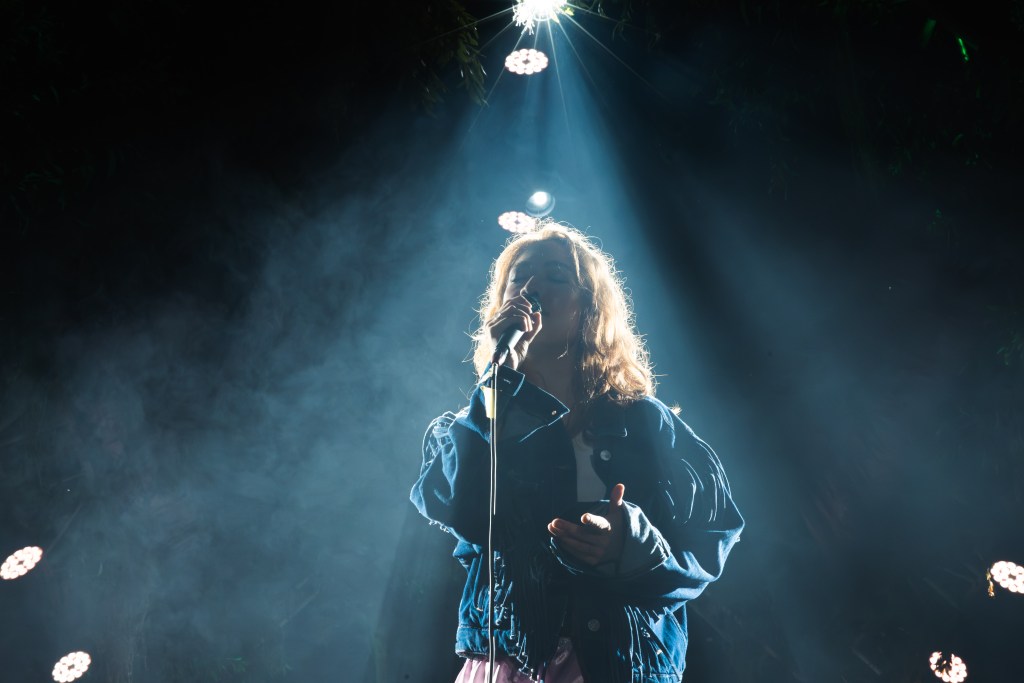
Léane: With FARANG exploring the idea of being seen as a foreigner in Thailand, when did you realize that being “between worlds” could become part of your artistic identity?
CUPNOODLE: Quite late, actually. For a long time, being between cultures felt like something I needed to figure out. In Thailand, I can be seen as a foreigner, while abroad, I’m obviously Asian. People always seem to have a different idea of who I am depending on where I am.
Eventually, I realized I didn’t need to resolve that. The in-between is probably the most honest representation of who I am. That’s where FARANG, my upcoming project and main focus for 2027, comes from. It explores belonging to different places without fitting completely into any one of them, culturally, musically, or personally. Rather than choosing sides, I’m interested in what happens when I stop trying to.
Léane: You’ve experienced music scenes in both Europe and Thailand. Do you feel like you have to choose where you belong ?
CUPNOODLE: Not anymore.
I think I spent enough of my life being asked some version of “Where are you actually from?” that I’m not particularly interested in asking my music the same question. I can make pop music influenced by things I heard growing up in the West and then put Mor lam in the middle of it. I can write half a song in English and suddenly say something in Thai because it’s funnier in Thai.
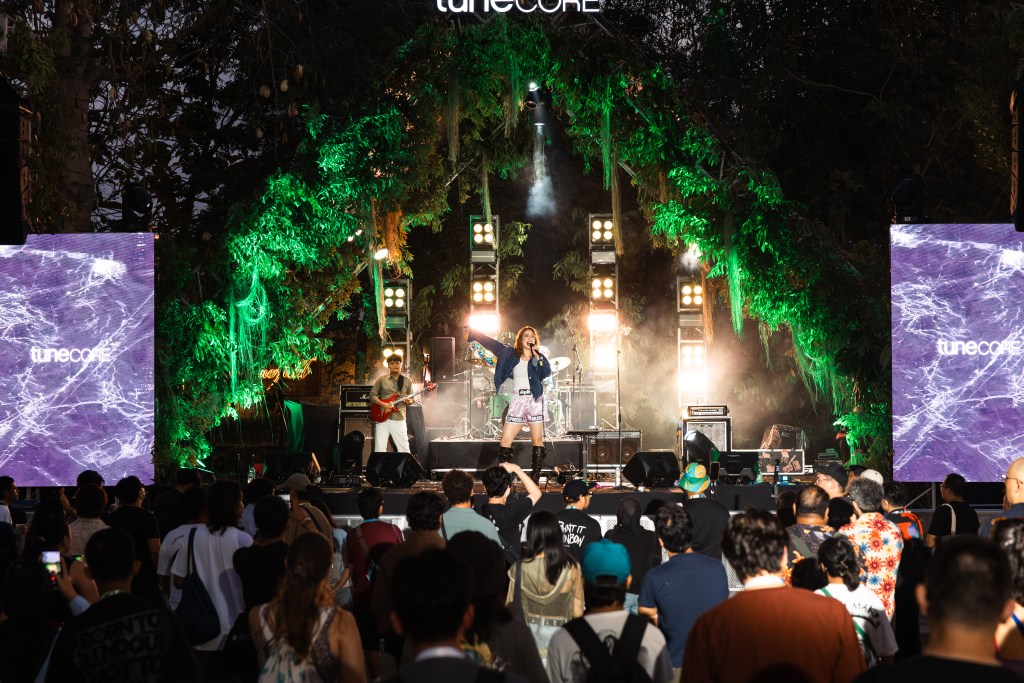
Léane: You recently played at AXEAN Festival alongside artists from across Southeast Asia. Did the experience change how you see your place in the Asian music scene?
CUPNOODLE: Yes, actually.
AXEAN made me realize how incredibly diverse Asian music is. We sometimes talk about breaking into the Asian market as though Asia is one place, which is slightly ridiculous when you think about it. Being around artists from different Southeast Asian countries made me feel like there is space for artists who are very culturally specific but still internationally minded. And it made me want to lean into my Thai identity more, not less.
Léane: If you could bring one thing from the European music scene into Thailand, and one thing from the Thai music scene into Europe, what would you bring?
CUPNOODLE: From Europe to Thailand, I’d probably bring more infrastructure for independent and alternative artists: more small venues, touring circuits, and places where artists can develop without needing to become huge first.
From Thailand to Europe? Less seriousness.
Thai people have this incredible ability to make a joke in the middle of disaster. I genuinely think that’s a cultural superpower. Sometimes the European music world can be very serious about being cool. Thailand would probably tell everyone to relax a little bit.
Léane: And finally, is there anything you would like to say to the people who have been following CUPNOODLE since the beginning, and to those who might be discovering you for the first time now?
CUPNOODLE: To the people who’ve been here from the beginning: thank you for letting me figure this out in public. You’ve basically watched me experiment, change sounds, change my mind, make questionable decisions, and slowly understand what CUPNOODLE actually is.
And if you’ve just discovered me, welcome. There’s no homework. Start anywhere. I hope somewhere in the music you find something that makes you laugh, makes you feel understood, or makes you look at something slightly differently. That’s really all I want CUPNOODLE to do.
Thank you to CUPNOODLE for this interview.
*Special thanks to Anastasia Voloboeva and Las Olas for making this interview possible as part of our Across the SEA collaboration, featuring artists from AXEAN Festival.