From the rise of esports in South Korea to the LCK’s continued dominance at the Esports World Cup in Paris, here’s how Korean League of Legends became the global benchmark. Featuring exclusive interviews with T1, Gen.G and Dplus KIA.
When the League of Legends tournament at the Esports World Cup (EWC) concluded in Paris, one statistic stood above the rest: three of the tournament’s four semifinalists represented South Korea’s League of Legends Champions Korea (LCK).
T1, Gen.G and Dplus KIA once again demonstrated why Korea remains the benchmark of professional League of Legends. While every international event brings new contenders from China, Europe or North America, the LCK continues to produce teams capable of competing for every major title.
This dominance is no coincidence. It is the result of more than two decades of investment, infrastructure and a unique competitive culture that transformed esports from a niche hobby into a national institution.
During the EWC in Paris, Soul Stage Media had the opportunity to speak with players from Gen.G and T1, while also attending Dplus KIA’s post-finals press conference. Their answers revealed a recurring theme: success isn’t built on individual brilliance alone, it comes from constant improvement, discipline and teamwork.
To understand why three Korean teams reached the final four in Paris, we first need to look back at where it all began.
How South Korea Became the Home of Esports
Long before League of Legends became one of the world’s biggest esports, South Korea had already built the foundations of competitive gaming.
Although competitive video games date back to the 1970s, South Korea truly embraced esports around the turn of the millennium. In 2000, the government supported the creation of the Korean eSports Association (KeSPA), an organization that helped structure the rapidly growing industry while promoting competitive gaming through television broadcasts and national events. That same year, Seoul hosted the very first World Cyber Games, marking one of the first major international esports competitions.
But the country’s success started even earlier.
Following decades of economic development, South Korea invested heavily in internet infrastructure during the 1990s, becoming one of the world’s most connected nations. Affordable high-speed internet quickly spread across the country, making online gaming accessible to millions of people.
At the heart of this transformation were the PC Bangs.
Unlike traditional internet cafés, PC Bangs became social spaces where friends gathered after school or work to play together for just a few thousand won per hour. More importantly, they created an environment where aspiring players could constantly compete against one another, exchange strategies and improve their skills. More than 25,000 PC Bangs eventually opened across the country, helping build one of the most competitive gaming communities in the world.
*Won (₩): South Korea’s official currency.
Then came StarCraft.
While some foreign games struggled to enter the Korean market, Blizzard’s real-time strategy title became a nationwide phenomenon. Television broadcasters began airing professional matches, dedicated commentators emerged, and players gradually became household names. What had once been considered a hobby was evolving into a spectator sport.
By the early 2000s, esports had become more than entertainment.
Professional leagues were created, dedicated esports arenas opened, and organizations started operating much like traditional sports clubs, complete with coaches, salaries and structured training environments
The LCK Legacy
While StarCraft laid the foundations of South Korea’s esports culture, League of Legends elevated it to a global audience.
Since Riot Games launched League of Legends in 2009, South Korea has established itself as one of the most successful regions in the game’s history. The LCK quickly became synonymous with excellence, producing legendary organizations such as T1, Gen.G, KT Rolster, DRX, Hanwha Life Esports and Dplus KIA, along with players whose influence extends far beyond the game itself.
No player embodies that legacy more than Lee « Faker » Sang-hyeok. Often referred to as the « Greatest of All Time, » Faker has become the face of competitive League of Legends, inspiring generations of players both in South Korea and abroad. Yet his success also reflects the strength of the ecosystem surrounding him. Korean organizations have consistently developed young talent through structured coaching, rigorous practice schedules and highly competitive domestic leagues, ensuring that each new generation is ready to compete on the international stage.
This culture of continuous improvement has allowed the LCK to remain one of the strongest regions in the world, even as China’s LPL and other international leagues have grown increasingly competitive. Rather than relying on individual stars, Korean teams are often recognized for their discipline, teamwork and meticulous preparation, qualities that have become hallmarks of the region’s identity.
The League of Legends tournament at the Esports World Cup offered yet another example of that legacy. While every international competition brings together the world’s best teams, the LCK once again proved why it remains one of the most respected leagues in professional esports. Beyond the results themselves, the tournament also offered a closer look at the mindset that continues to shape Korean League of Legends.
A Culture of Improvement
The League of Legends tournament at the Esports World Cup showcased the LCK’s strength on stage. But perhaps the most striking similarities emerged away from the competition itself.
Throughout the event, Soul Stage Media had the opportunity to speak with players from T1 and Gen.G, while also attending Dplus KIA’s post-finals press conference. Although each interview took place under different circumstances, after a difficult defeat, a hard-fought victory or a championship win, the players consistently returned to the same themes: discipline, teamwork and continuous improvement.
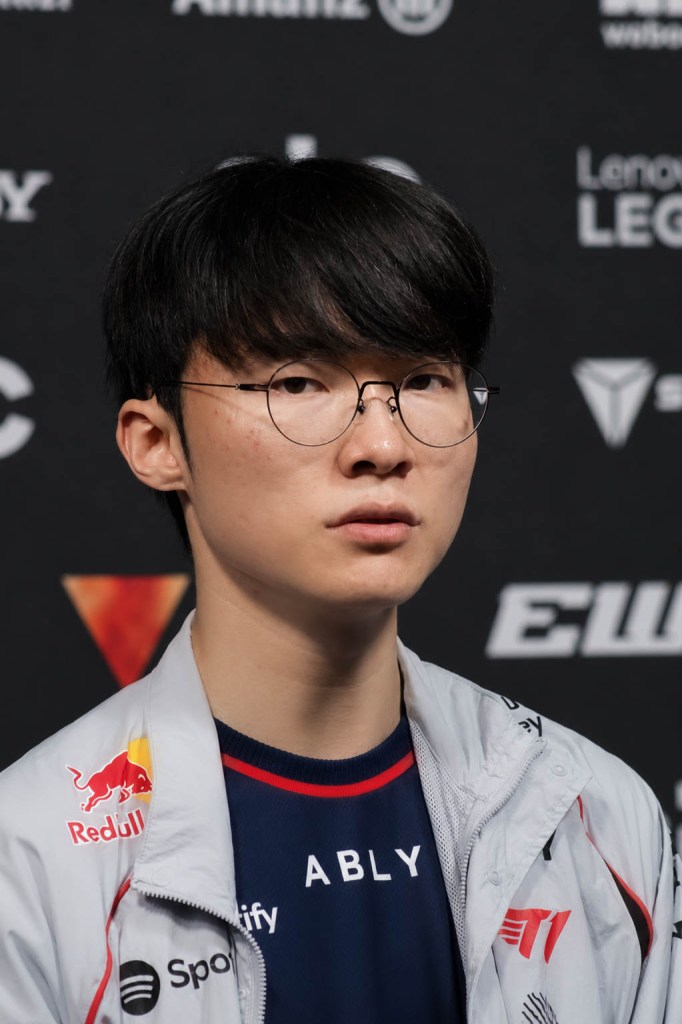
Following T1’s defeat in the third-place match, jungler Oner chose not to dwell on disappointment. Instead, he apologized to the fans before looking ahead.
« We’ll go back to the LCK, keep practicing hard, and do our best to come back with a much better performance. »
His message reflected a mindset deeply rooted in Korean esports: every setback is viewed as an opportunity to improve.
A similar philosophy emerged from Gen.G. Asked what made the difference in the decisive third game, Ruler pointed not to individual performances, but to the team’s collective approach.
« Everyone on the team was completely on the same page and focused on the same objective. »
Preparation, communication and trust in one another mattered more than individual brilliance.
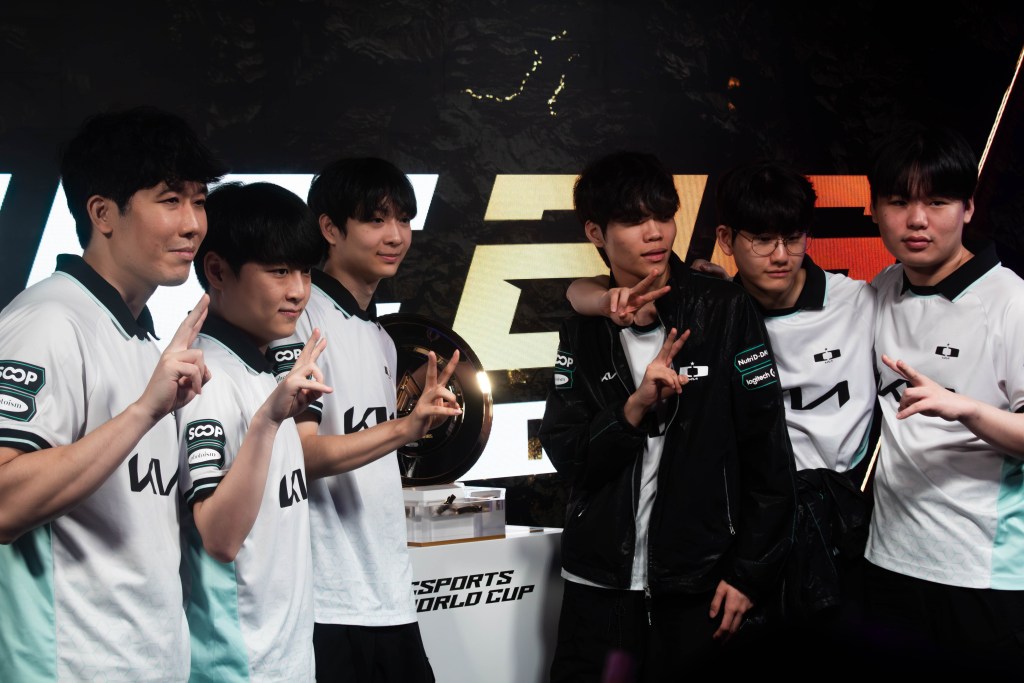
That same mindset was evident during Dplus KIA’s post-finals press conference. Rather than focusing solely on lifting the trophy, the players reflected on the journey that led them there. After losing their opening match of the tournament, the team gradually built confidence with each victory.
« Going through the loss and taking it to victory actually made us grow as a team. »
Even after securing the championship, the emphasis remained on growth rather than celebration. The victory was presented not as the end of the journey, but as another step toward becoming a stronger team.
Across three organizations and three very different tournament outcomes, one message remained remarkably consistent: the pursuit of excellence never stops, regardless of the result.
*This article is based on exclusive interviews conducted by Soul Stage Media during the Esports World Cup, Dplus KIA’s post-finals press conference, and research from the French Institute for International and Strategic Affairs (IRIS).